

Creating The House on Mango Street
When I began creating House on Mango Street, I knew the work had to be rooted in listening. Not just to the text, but to the lives and memories that surround it. I was not interested in a literal translation of Sandra Cisneros’s stories. I wanted to understand the world that shaped them and the ways those stories continue to live in the body.
One of the first people I interviewed was my dad.
My dad is close in age to Sandra Cisneros, and as a Chicano man who grew up in the same era, his memories offered an essential lens into the cultural landscape of the 1970s and 80s. We talked about what it meant to grow up Chicano during that time. About neighborhood life, family expectations, pride, and the quiet responsibility that often came early. About communities where kids played outside, rode bikes, and learned who they were through each other, long before the world asked them to explain themselves.
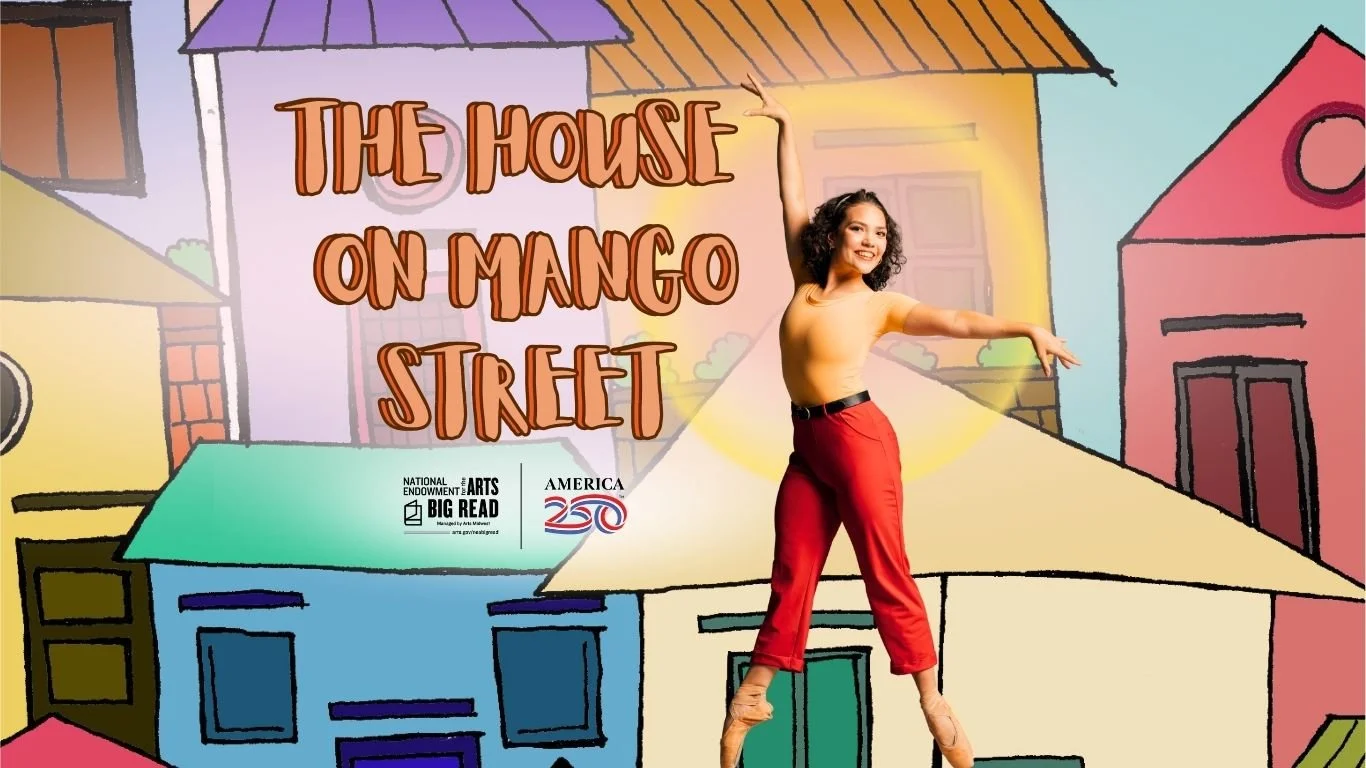
May 8th and 9th at the Logan Center in Hyde Park.
Much of what he shared came back to music.
Music was not background sound. It was identity. It poured out of car windows, living rooms, and backyard gatherings. Oldies, soul, early funk, Chicano rock, and Latin rhythms carried romance, resistance, humor, and longing all at once. As my dad spoke, it became clear that this soundscape was inseparable from the emotional world Cisneros writes into Mango Street.
That conversation shaped the playlist for this piece.
Songs by Santana, WAR, Los Lobos, Selena, KAINA, and traditional Chicano and Mexican-rooted music became anchors in the studio. The music helped ground the choreography in lived cultural memory, not nostalgia, but something embodied and present. Rhythm informed how the dancers carried weight, how they moved through space, how they listened to one another. The sound created a sense of continuity, something steady to return to.
As I worked, I realized how many of Sandra’s stories felt deeply familiar from my own childhood.
Stories like Chanclas and Hips resonated in a very personal way. Riding bikes. Playing outside. Growing up in a poor neighborhood where imagination, freedom, and community existed alongside limitation. While my childhood took place in the 1990s, much of that physical experience felt aligned. The way kids claim the street as their world. The way bodies learn confidence, embarrassment, humor, and power long before language fully forms.
When I was six years old, my family experienced homelessness. Because of that, the question of “what is home” has never been simple for me, and it has never been only about a building. Home has always been more about people than place. My culture. My siblings. My parents. My grandparents. The relationships that held us together mattered more than any address ever could.
That lived experience shaped how I entered Mango Street.
Esperanza is constantly negotiating what home means, what she longs for, what she rejects, and what she is still learning how to name. The book holds that tension honestly, the desire for a home you can claim and the reality that home can also be something you build through people, memory, and resilience. In the studio, I kept returning to that idea. What does it mean to feel rooted when place is unstable? What does it mean to find steadiness in culture, in sound, in one another?
This is where dance felt essential.
Movement allowed us to explore those questions without forcing answers. A repeated gesture, a shared rhythm, a sudden stillness could hold complexity without explanation. I wanted the dancers to understand that House on Mango Street is not only about one girl or one neighborhood. It is about growing up inside a body that is being watched, shaped, and slowly claimed as your own. It is about learning where you belong and imagining where you might go.
This piece became an intergenerational conversation. Sandra Cisneros’s voice. My dad’s memories. My own childhood. The dancers’ lived experiences. All of it layered together through movement and music.
Creating Mango Street was not about recreating the past. It was about honoring it. About recognizing how culture, sound, and memory live in the body and continue to shape who we become. This work is an offering to anyone who has ever had to define home for themselves, and to the people and stories that make that possible.