

Why We Still Need New Ballets
Many of the world’s most beloved ballets were created more than a century ago.
Swan Lake.
The Nutcracker.
Giselle.
Sleeping Beauty.
These works remain essential to ballet’s history. They carry technique, tradition, music, theatrical imagination, and a standard of excellence that continues to shape dancers and audiences today.
But ballet cannot remain relevant by only repeating the past.
If ballet is a living art form, then it must keep asking new questions. It must keep making room for new stories, new voices, new cultural conversations, and new ways of seeing the human experience.
At Ballet 5:8, we believe ballet is not simply a museum for preserving great works. It is a living, breathing language, one capable of wrestling with the questions, tensions, griefs, hopes, and complexities of our own time.
That is why original work remains central to who we are.
A Living Art Form for a Living World
Every generation inherits ballet differently.
For some, ballet is a first encounter with classical music, discipline, beauty, and theatrical storytelling. For others, it is an art form they love deeply but also long to see expanded, challenged, and renewed.
Today’s audiences bring different questions into the theater than audiences did 100 years ago.
They are asking about identity, family, faith, culture, justice, grief, resilience, womanhood, belonging, and what it means to live with courage in a fractured world.
Original ballet gives artists a way to enter those questions through movement.
It allows the stage to become a place where the body speaks before language can. A place where beauty does not avoid difficulty, but helps us look at it more honestly. A place where story, music, design, and physical expression can hold complexity without reducing it.
For Ballet 5:8, new work is not a departure from ballet’s tradition. It is one of the ways we honor that tradition.
Classical ballet has always required discipline, imagination, and risk. New ballets ask us to bring those same values into the present.
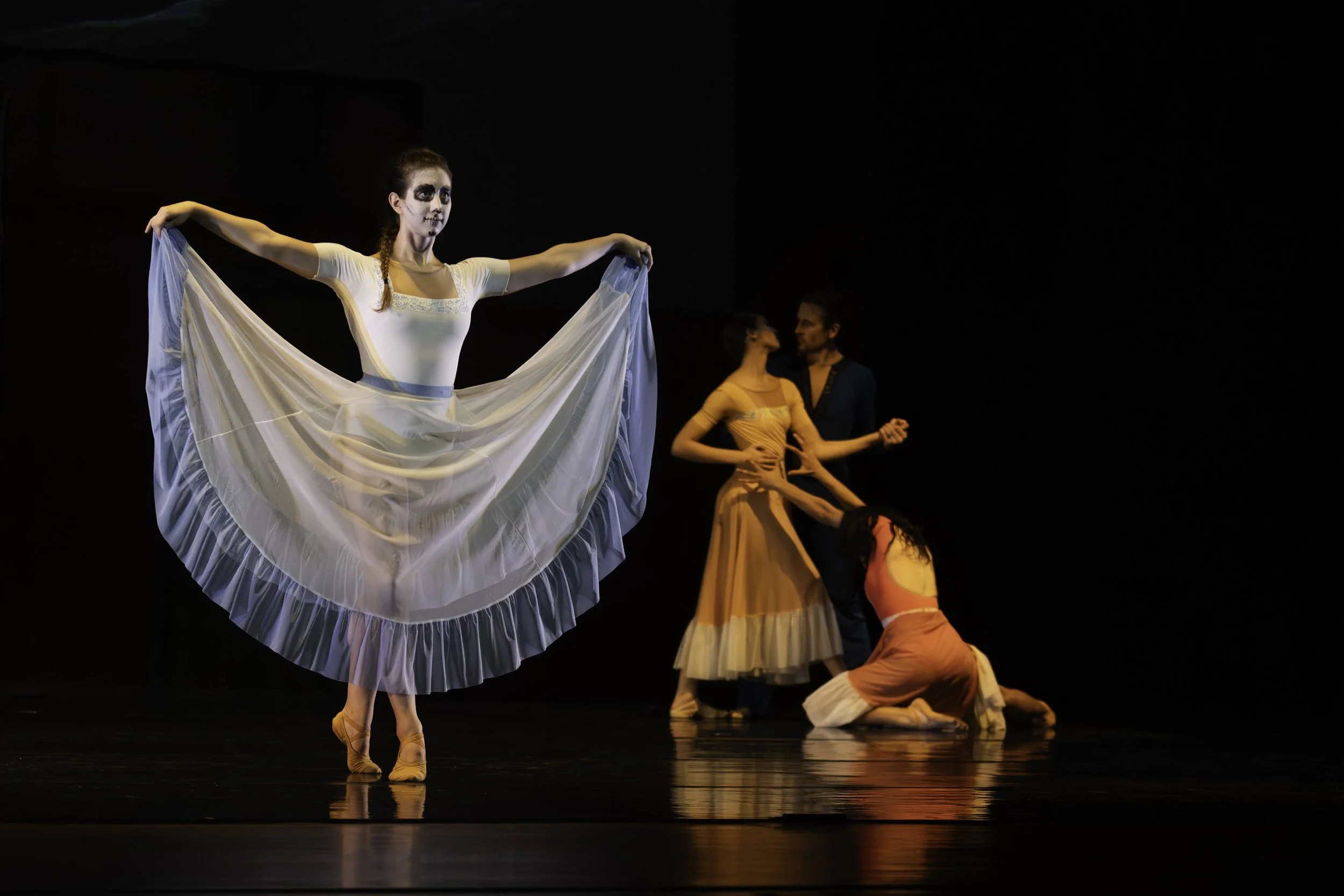
Women on Fire: New Work in Ballet 5:8’s 26/27 Season
Ballet 5:8’s 26/27 Season, Women on Fire, continues this commitment to bold storytelling, cultural imagination, and the creative force of women choreographers.
As part of this season, Artistic Director Julianna Rubio Slager brings forward new work that invites audiences into urgent, layered conversations about power, voice, womanhood, perception, and endurance.
Shrewd reimagines Shakespeare’s The Taming of the Shrew through a contemporary lens. Rather than approaching the story as a simple battle of wills, Shrewd opens a larger question: What roles are women asked to perform, and what is the cost of being misunderstood?
In a culture where women are often praised for being agreeable and punished for being perceptive, Shrewd asks us to reconsider the word itself. What if shrewdness is not a flaw? What if it is wisdom, discernment, strategy, humor, and survival? What if the woman labeled difficult is actually the one seeing most clearly?
For student audiences, Shrewd also offers a fresh point of entry into classical literature. By bringing Shakespeare into the language of dance, humor, and accessible storytelling, Ballet 5:8 invites young people to experience literature not as something distant or static, but as something alive, embodied, and open to conversation. Learn more about the work here: Shrewd.
Chingonas brings forward a bold and culturally charged expression of feminine power. The title carries grit, confidence, defiance, and command. In the context of ballet, it opens a conversation about whose strength has historically been seen, whose has been misunderstood, and whose has been left outside the frame of classical tradition.
Ballet has often been associated with refinement, restraint, and control. Chingonas pushes that vocabulary wider. It asks what happens when ballet makes room for unapologetic presence. For women who take up space. For movement that is not only delicate, but fierce. For artistry rooted in cultural specificity, inherited strength, and embodied confidence.
Women Who Carry Water turns our attention toward endurance, labor, memory, and care. To carry water is to sustain life. It is also to bear weight, to move with necessity, to serve, to remember, and to continue.
The image suggests generations of women whose strength may not always announce itself loudly, but whose presence makes survival possible. It invites us to consider the unseen work women carry in families, communities, faith traditions, and cultural memory. It asks us to look at care not as weakness, but as force.
Together, these works expand the emotional and cultural vocabulary of ballet.
They ask what strength looks like when it is strategic.
When it is fierce.
When it is inherited.
When it is communal.
When it is carried quietly.
When it refuses to disappear.
Explore the full season here: Ballet 5:8 26/27 Season.
New Stories for New Generations
New ballets do more than create new performances. They create new entry points.
A student who may never have imagined ballet as a place for Shakespeare might find their way in through Shrewd. A young dancer searching for work that reflects strength, culture, and agency may recognize something of herself in Chingonas. An audience member who has watched generations of women carry unseen burdens may find language for that endurance in Women Who Carry Water.
This is why original ballet matters.
It does not erase the classics. It places them in conversation with the present.
It asks what ballet can say now.
It asks who ballet can reach now.
It asks what stories need the rigor, beauty, and expressive power of this form today.
Literature, History, and Culture
Many Ballet 5:8 productions begin with a story.
Sandra Cisneros’ The House on Mango Street.
The folklore of La Llorona.
The life and writings of Edgar Allan Poe.
Shakespeare’s The Taming of the Shrew.
These works remind us that ballet can be a bridge between disciplines, generations, and communities.
When literature, folklore, history, and cultural memory enter the studio, ballet becomes more than a display of technique. It becomes an act of interpretation. It asks dancers not only to execute movement, but to embody meaning.
That process expands what ballet can hold.
It allows the form to speak across cultural contexts. It invites audiences who may not see themselves in traditional story ballets to encounter ballet as something immediate, human, and connected to their own questions.
It also gives young people a powerful way to engage stories they may already be studying in classrooms. Through dance, a text becomes physical. A character becomes human. A theme becomes visible.
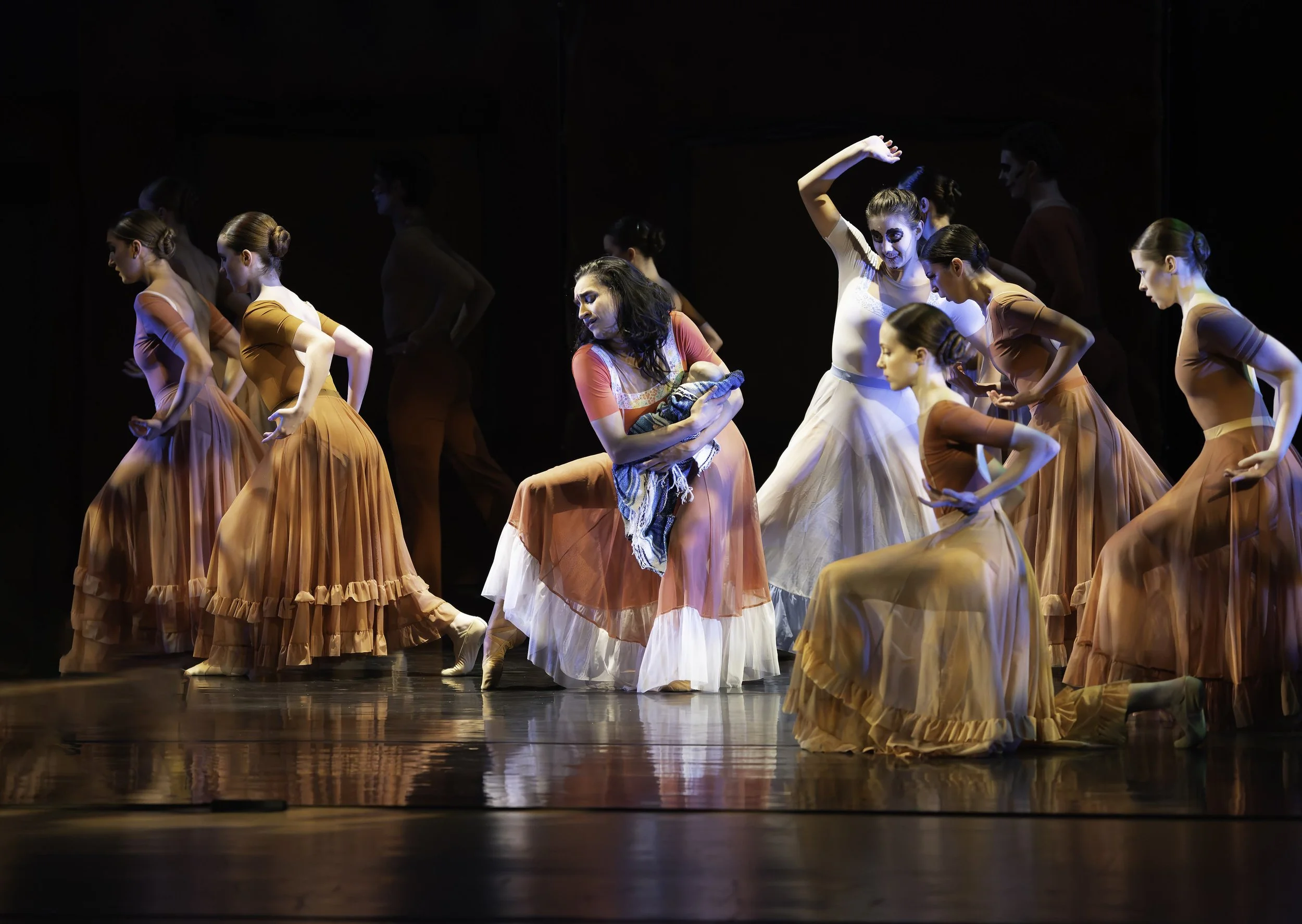
Training the Artists Who Will Carry Ballet Forward
New ballets also require new kinds of artists.
They require dancers who can move with technical clarity, but also think deeply, listen carefully, and embody complex characters and ideas. They require performers who understand that ballet is not only about line, extension, and precision, but also about communication, imagination, and truth.
That kind of artist is not formed overnight.
It begins in the studio, through training that develops discipline, artistry, confidence, and joy. At the School of Ballet 5:8, students at every level are invited into a serious and supportive environment where technique and storytelling grow together.
For advanced dancers, that pathway continues through the Trainee and Conservatory Programs, where students train in a professional environment, develop rehearsal standards, build performance experience, and prepare for the demands of company life.
From there, the Second Company gives early-career artists the opportunity to train daily, perform alongside the professional company, tour, participate in outreach, and grow through mentorship.
This matters because original work depends on artists who can help build something that has never existed before.
A dancer learning a traditional role steps into a history.
A dancer creating a new role helps make history.
At Ballet 5:8, the creation of new ballets is directly connected to the training of new artists. The School, Trainee Program, Conservatory, Second Company, and professional Company are all part of one larger ecosystem: forming dancers who can carry ballet forward with excellence, courage, and imagination.
Original Work Expands the Art Form
New ballets challenge everyone involved.
They ask choreographers to build new worlds.
They ask dancers to become collaborators, interpreters, and storytellers.
They ask designers to imagine visual environments that have never existed before.
They ask audiences to meet ballet not only as something inherited, but as something still unfolding.
Original work creates space for new voices and perspectives to shape the future of the art form.
More importantly, it reminds us that ballet is not finished.
It is still becoming.
That is why Ballet 5:8 has created more than 60 original ballets and continues commissioning and producing new work each season.
Because tradition matters.
And so does imagination.
Because the past has given ballet a rich inheritance.
And the future requires artists willing to create what has not yet been seen.
Keep Exploring
See what is coming this season: Ballet 5:8 26/27 Season
Learn more about student training: School of Ballet 5:8
Explore advanced pre-professional training: Trainee and Conservatory Programs
Meet the next generation of professional artists: Second Company