

How to Choose the Right Ballet Class for Your Child
Choosing a ballet class for your child can feel exciting and a little overwhelming.
Maybe your child dances around the living room every day. Maybe they are shy, but you want to help them build confidence. Maybe they are full of energy and need a structured activity. Maybe they have already taken dance and are ready for something more serious.
Whatever brings you here, the most important thing to know is this:
The right ballet class should meet your child where they are, help them grow, and make them feel safe, challenged, and encouraged.
At the School of Ballet 5:8, we believe ballet training can support the whole child, not just the dancer. Ballet can help children develop coordination, confidence, musicality, discipline, creativity, focus, and joy.
Explore School of Ballet 5:8 programs here:
School of Ballet 5:8
View current class options here:
School Classes
Quick Answer: What Should Parents Look for in a Ballet Class?
A good ballet class for children should include:
Age-appropriate instruction
Safe, clear, and encouraging teaching
A positive classroom environment
Strong communication with parents
Opportunities for growth over time
Teachers who care about both technique and character
A school culture that values the whole child
The best ballet class is not always the most advanced class. It is the class that helps your child build a strong foundation while learning to love movement.
What Age Should a Child Start Ballet?
Many children begin ballet between ages 3 and 6.
At this age, ballet classes usually focus on:
Coordination
Musicality
Creativity
Listening skills
Balance
Following directions
Confidence
Classroom structure
Young children do not need previous dance experience to begin ballet. In fact, most students start with no formal training at all.
For young dancers, the goal is not perfection. The goal is to help children enjoy movement while building age-appropriate physical, social, and emotional skills.
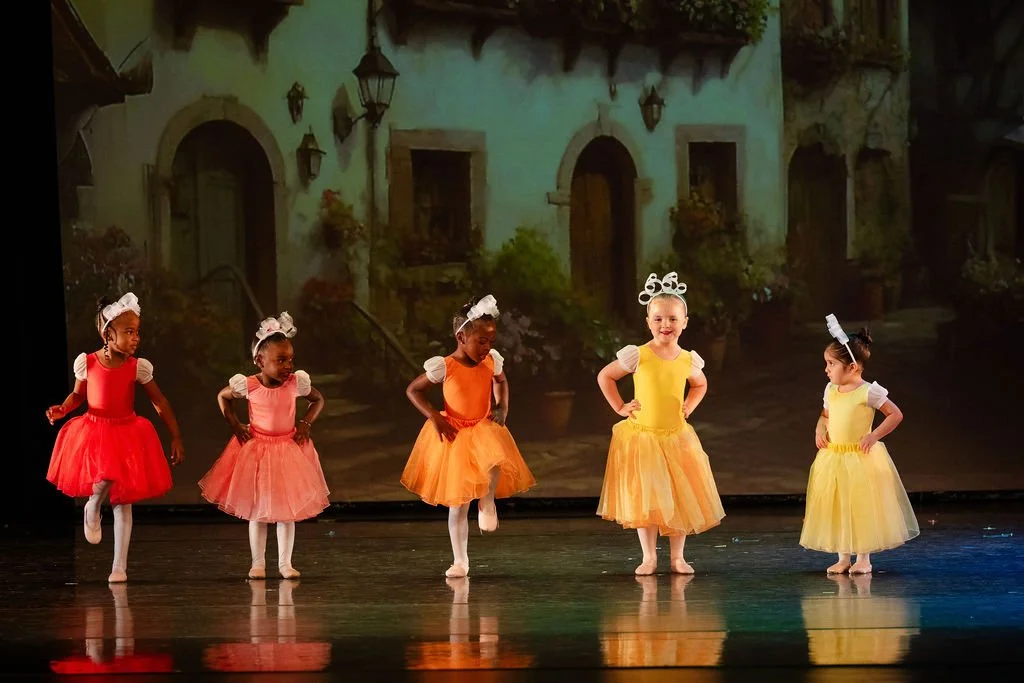
The School of Ballet 5:8’s Preparatory Program is designed for young dancers and beginning students who are building a strong foundation in ballet.
Learn more here:
Preparatory Program
How Dance Supports Child Development
Parents often think of ballet as an arts activity, but dance also supports many areas of child development.
Research on physical activity and arts education shows that movement and arts participation can support children’s growth in several important ways.
1. Dance Builds Coordination and Body Awareness
Ballet helps children learn how to control their bodies in space.
Students practice:
Balance
Posture
Coordination
Flexibility
Strength
Spatial awareness
Gross motor skills
These skills are helpful far beyond the studio. Body awareness can support everyday confidence, sports, theater, music, and general physical development.
2. Dance Supports Focus and Memory
Ballet requires children to listen, remember combinations, follow patterns, and connect movement to music.
That means students are practicing:
Attention
Sequencing
Memory
Problem solving
Self-control
Following multi-step directions
For many children, dance is a joyful way to strengthen focus without sitting still at a desk.
3. Dance Helps Children Build Confidence
Learning ballet gives children the experience of trying something difficult, practicing over time, and seeing progress.
That process matters.
A child who learns a new step, performs in class, or works through a challenge is building confidence through effort.
At Ballet 5:8, we want students to understand that growth does not happen all at once. It happens through patience, encouragement, correction, practice, and care.
4. Dance Encourages Social and Emotional Growth
A ballet class is also a community.
Students learn to:
Take turns
Respect others
Listen to a teacher
Work in a group
Encourage classmates
Manage nerves
Receive correction
Celebrate progress
These are life skills.
Dance can give children a healthy place to express emotion, build resilience, and feel part of something larger than themselves.
5. Dance Nurtures Creativity
Even in classical ballet training, children are not simply copying steps.
They are learning how movement can tell a story, express feeling, respond to music, and communicate ideas.
Creative movement and ballet help children explore imagination, rhythm, character, and expression in a structured environment.
Look Beyond the Recital
Recitals and performances can be wonderful, but they should not be the only thing parents consider when choosing a ballet school.
A strong ballet school should care about the classroom experience every week.
Look for a school that emphasizes:
Safe training
Clear progression between levels
Qualified instructors
Age-appropriate expectations
Respectful correction
Good communication with families
A healthy studio culture
A balance of excellence and care
The right school should help students grow as dancers and as people.
Ask About Fees Before You Register
This is a practical point, but an important one.
Some dance programs have tuition listed upfront, but families later discover additional required costs for performances, costumes, or recital participation.
At the School of Ballet 5:8, costume fees are included in tuition, so families are not surprised by additional costume fees later in the year.
That matters for parents.
Clear pricing helps families plan and makes the experience less stressful.
When comparing ballet schools, it is completely appropriate to ask:
Are costume fees included?
Are there performance fees?
Are there recital fees?
Are uniforms required?
What costs should we expect during the year?
A good school should be willing to answer those questions clearly.
Should Boys Take Ballet?
Yes. Absolutely.
Ballet is excellent training for boys.
Ballet helps boys develop:
Strength
Agility
Coordination
Flexibility
Musicality
Discipline
Confidence
Athleticism
Ballet is not only for girls. Male dancers have been essential to ballet for centuries, and ballet training can also support boys who are interested in sports, theater, music, martial arts, or other movement-based activities.
The School of Ballet 5:8 offers Boys Ballet Classes designed to help boys build strength, confidence, and skill in a supportive environment.
Learn more here:
Boys Ballet Classes

Recreational Ballet vs. More Serious Training
Not every child who takes ballet wants to become a professional dancer.
That is perfectly okay.
Some students take ballet because they love movement. Some enjoy performing. Some need a creative outlet. Some want physical activity. Some later discover they want to train more seriously.
A healthy ballet school should provide room for different goals.
At the School of Ballet 5:8, students can begin with age-appropriate classes and, as they grow, explore more structured training pathways if they are ready.
That may include:
Preparatory classes
Children’s ballet
Youth and teen ballet
Boys Dance
Adult ballet
Conservatory training
Trainee opportunities
Second Company pathways
Explore class options here:
School Classes
Signs Your Child Is in the Right Ballet Class
A good ballet class should help your child feel:
Welcomed
Safe
Encouraged
Challenged
Seen
Proud of their progress
You may notice your child:
Talking about class at home
Practicing steps on their own
Becoming more confident
Listening more carefully
Showing more body awareness
Looking forward to class each week
Growth can look different for every child. Some children become more outgoing. Some become more focused. Some become more disciplined. Some simply find a place where they feel joyful and at home.
Questions Parents Can Ask Before Choosing a Ballet School
Before enrolling, parents may want to ask:
What class is best for my child’s age and experience?
What is included in tuition?
Are costume fees included?
What should my child wear to class?
How do students progress through levels?
Are there performance opportunities?
What is the school’s teaching philosophy?
How does the school support beginners?
Are there options for boys?
Is there a pathway for students who want to train more seriously?
These questions can help you understand whether a school is the right fit for your family.
Why Families Choose the School of Ballet 5:8
The School of Ballet 5:8 offers ballet training in an environment that values both excellence and care.
Families choose Ballet 5:8 because the school offers:
High-quality classical ballet training
A nurturing and structured environment
Classes for children, teens, adults, boys, beginners, and advanced dancers
Clear pathways for growth
A connection to a professional ballet company
Teachers who care about the whole student
Costume fees included in tuition, with no additional costume fee surprises
Whether your child is dancing for the first time or hoping to pursue ballet more seriously, Ballet 5:8 can help you find the right starting point.
Find the Right Ballet Class for Your Child
Choosing a ballet class is about more than choosing an activity.
It is about finding a place where your child can grow in confidence, discipline, creativity, strength, and joy.
The School of Ballet 5:8 would love to help you find the right class for your child.
Start here:
Explore the School of Ballet 5:8